Three tanks handle everything that goes into a rental RV and everything that comes back out. Here is what each one holds, why the level panel can mislead you, and where the contents are allowed to go.
Road notes
- Fresh water supplies the sinks, shower and toilet, gray water collects from drains, and black water comes from the toilets, all in separate tanks.
- Plan on emptying holding tanks every three to seven days; a solo traveler may stretch past a week while a family of four dumps every few days.
- Tank sensors get coated and give wrong readings, so find your capacities in the owner’s manual and watch drain flow and smells as a backup.
- Black water goes only to an approved dump station or sewer connection, and many places no longer allow gray water to be drained onto the ground.
- Dump the black tank first, then the gray, so soapy water rinses the sewer hose before you disconnect it.
A rental RV is a small apartment with plumbing you run yourself. Three tanks do the work: fresh water in, gray and black water out. Learn which drain feeds which tank, how to read the level panel and where the contents may legally go, and the trip’s least pleasant chore takes five minutes.
The Three Tanks in a Rental RV
The fresh water tank is usually the biggest of the three and supplies the kitchen sink, bathroom sink and shower. Gray water collects from sink drains, the shower and a dishwasher if the rig has one. Black water comes from the toilets.
Two waste tanks exist for volume and sanitation. Sinks and showers produce more water than the toilet and need emptying more often, and gray water is mostly soap, while sewage must go to a proper dump station.
Underneath, most motorhomes run both tanks to one sewer outlet. A blade valve per tank meets at a wye fitting, worked by hand or by a remote switch. Each tank vents through a stack to the roof, which prevents a vacuum as it drains and sends odors above the rig.
Expect exceptions. Some rigs route the bathroom sink, and sometimes the shower, into the black tank depending on where the tanks sit, and some builders do it deliberately to keep solids afloat. Ask at pickup which drain goes where.
What Goes Into Black, Gray and Fresh Water Tanks
| Tank | What it holds | Where it goes |
|---|---|---|
| Fresh | Water for sinks, shower and toilet | The largest tank on most rigs |
| Gray | Sink, shower and dishwasher drains | Mostly soapy water, still waste |
| Black | Toilet waste | Approved dump station only |
Only toilet waste and dissolving toilet paper belong in the black tank; paper that breaks down is treated as mandatory. Water is the other half of the job: plenty of it keeps solids moving instead of caking on the walls, which fouls sensors and produces readings you cannot trust.
Greasy dishwater and food scraps are the usual cause of a gray sensor that reads wrong, so scrape plates into the trash first.
Keep hoses dedicated. Each tank has its own hose and they should never be swapped, since cross-contamination can make you sick. The drinking water hose never goes near the black tank valve; a separate utility hose handles that side.
Reading Tank Gauges and Estimating Capacity
Tank sizes run from 20 gallons to more than 100 gallons each. Capacities are in the owner’s manual or on a sticker inside a storage compartment, so find them at pickup and photograph the page.
Most rigs have a monitor panel that estimates levels from sensors. Treat it as a rough guide, because coated sensors drift and a tank can read two-thirds when it is nearly empty. Flow from the sink drain and any new smell are better evidence.
Plan on emptying holding tanks every three to seven days. A solo traveler can stretch past a week, and a family of four may dump every few days. Full tanks also add real weight.
As an illustration, a family of four sharing a rig that a solo traveler empties once a week should budget roughly twice as many dump stops, before anyone takes a long shower.
When and Where to Empty Holding Tanks
Black water goes to an approved dump station or sewer connection and nowhere else; dumping it elsewhere can bring a substantial fine. Gray water is not a free pass either. It was once routinely drained onto the ground, but many places no longer allow that under local public health laws, and some campgrounds prohibit it.
At a full hookup site, RVers disagree about leaving the gray valve open. Some do on long stays; others keep both valves shut so a few gallons of soapy water remain to rinse the hose after a black tank dump. New to this? Keep both closed.
Locate the dump station before you need it. Our guide to boondocking and dry camping covers stretching tanks off-grid.
Dump Station Steps Without the Mess
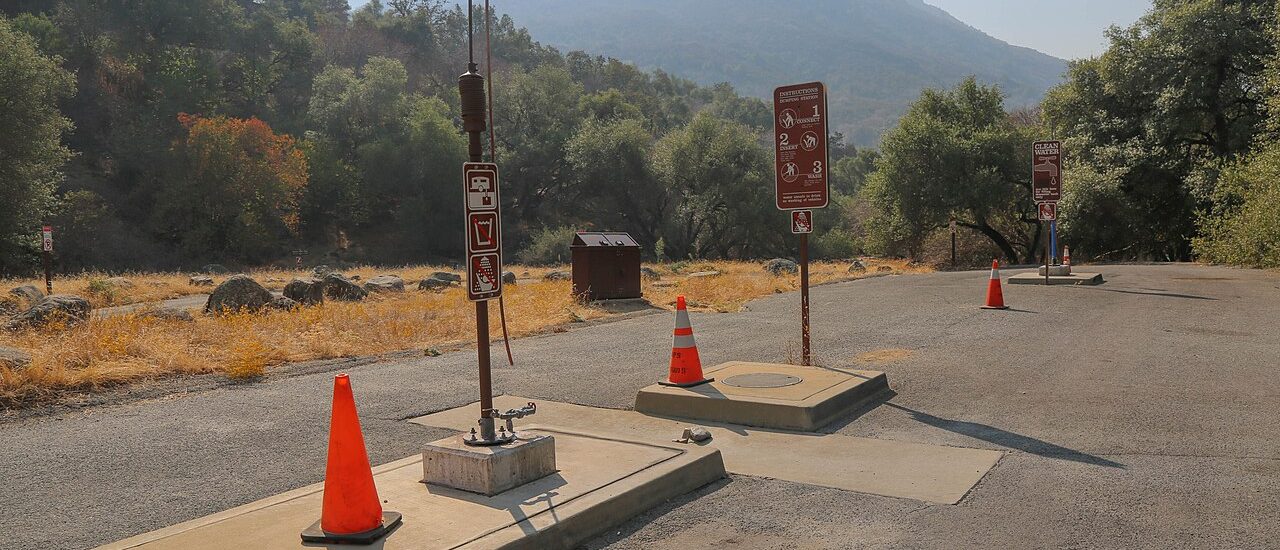
Bring long rubber gloves. Connect the sewer hose from the RV outlet to the ground sewer, check both ends are seated, then work in the order that keeps the hose clean:
- Gloves on, hose secured at both ends.
- Open the black valve, let it drain fully, close it.
- Open the gray valve so soapy water rinses the hose, then close it.
- Disconnect, cap the hose and stow it in its own compartment.
Road-tested tip
Keep a separate utility hose for tank work and never use the drinking water hose at the black tank valve. Long rubber gloves turn a messy job into a quick one.
Boondocking, Winter Storage and Rental Return Rules
Off-grid camping puts tank math in charge: with no hookups you cannot drain the gray tank freely or refill the fresh tank, so shower length and toilet habits decide how many nights you get.
Cold-weather rentals bring a wrinkle. Winterizing means draining and cleaning the black, gray and fresh tanks, and the job leaves non-toxic pink RV antifreeze in the plumbing, usually two to four gallons of it. When a rig is de-winterized, that fluid ends up in the holding tanks and must be emptied at a suitable waste disposal site. Picking up in spring? Ask whether the tanks were emptied afterward.
Return rules come from the rental company, not a national standard, so confirm at pickup whether the tanks must come back empty. Our guide to renting an RV for a first road trip covers the rest of the pickup inspection, and the rental RV planning timeline helps you sort these questions before you leave home.
Questions from the road
Q: How often do you have to empty RV holding tanks?
A: Every three to seven days is a normal planning figure. A solo traveler can go past a week, and a family of four may need to dump every few days.
Q: Can you dump gray water on the ground?
A: Not usually. Gray water was once commonly drained onto the ground, but many places no longer allow it under local public health laws, and some campgrounds prohibit it.
Q: Why does my tank gauge show two-thirds when the tank is empty?
A: Sensors get coated by waste and grease and drift out of calibration, which is why readings can be wrong in either direction. Watch how the sink drains and check for smells rather than trusting the panel alone.
Q: Do you leave the black tank valve open at a full hookup site?
A: The usual advice is to keep it closed until the tank is ready to dump. Leaving it shut also keeps liquid in the tank so solids stay suspended instead of piling up on the floor of the tank.
Road rules, fees, closures and border requirements change. Check with the state transportation department, park, rental company or border agency before you travel. This guide is general information.