Inflate to the placard, not the sidewall. Here are the tire pressure mistakes that derail road trips and the five-minute routine that avoids them.
Road notes
- The number on the tire sidewall is a maximum, not a recommendation; the correct cold pressure is on the placard in the driver’s doorjamb or in the owner’s manual.
- Check tires cold, after at least three hours parked, and never bleed air from hot tires to bring the reading down.
- A tire can lose up to half its air pressure and still not look flat, so a gauge beats the TPMS light and an eyeball check every time.
- Expect about 1 psi of pressure loss for every 10-degree drop below 40 degrees Fahrenheit, plus 1 to 2 psi per month from natural permeation.
- Check the spare too; it loses air through permeation just like the tires on the road, so include it in the checkup.
Of all the checks that matter before a long drive, tire pressure is the one most often done wrong in one of two directions: skipped entirely, or done with the wrong number. Both mistakes are easy to make because the misleading information is literally molded into the sidewall of the tire. Here are the mistakes that show up again and again, and what to do instead.
The Sidewall Number Is a Limit, Not a Recommendation
The number printed on the tire’s sidewall is the maximum pressure that tire can withstand. It is not what the engineers who designed your car decided the tires should run at. A mechanic at a AAA Approved Auto Repair shop ranks this among the biggest vehicle maintenance misconceptions he encounters, and it costs nothing to fix: the correct figure is already on your car.
Inflating to the sidewall maximum for ordinary driving buys you a harsher ride and nothing else. Overinflating by just 6 psi can increase the risk of a puncture. Treat the sidewall number as a ceiling to stay under, and as a reference point for the one situation where higher pressures make sense, which we cover below.
Where to Find the Right Pressure for Your Car
Your car already has the answer on a placard, usually on the driver’s side doorjamb. Depending on the vehicle, you might also find it on the door edge or door post, inside the glove box door, or on the fuel door. The owner’s manual lists it too. The placard tells you the recommended cold pressure, the maximum vehicle load and the recommended tire size.
Two details people miss. First, front and rear pressures are sometimes different, so read the whole placard rather than assuming a single number. Second, there is no universal figure, but as a frame of reference, most cars recommend somewhere between 32 and 35 psi. If your vehicle has no placard at all, fall back on the owner’s manual, or ask the vehicle manufacturer, the tire manufacturer or a tire dealer.
Why You Check Tires Cold, Not After Driving
Cold means the car has been parked for at least three hours, or the tires have not run more than a mile. Driving warms the air inside the tire and pushes the reading up, so a pressure check after a highway run gives you a number you cannot compare against the placard. Set the pressure cold and expect the reading to climb as you drive.
If you have to drive more than a mile to reach an air pump, work around it. Note the cold pressure each tire should have, measure the warm reading on arrival, and add the difference. Say the placard calls for 35 psi, the cold reading was 28, and the tire now reads 33 warm: inflate to 40 psi and recheck cold later.
One related trap: never bleed air out of hot tires to bring the reading down. The pressure buildup from driving is normal and will settle on its own.
Temperature works the same way in slow motion. When the temperature drops below 40 degrees Fahrenheit, expect tire pressure to fall about 1 psi for every 10-degree drop, so a cold snap usually means adding air. Tires also lose 1 to 2 psi per month on their own in cool weather, and even more in hot weather, which is why a car parked for weeks is almost always low.
The TPMS Light Is a Warning, Not a Maintenance Plan
Modern cars have a tire pressure monitoring system that lights a warning on the dash when a tire loses pressure. That light is useful, but treat it as a backstop rather than a plan. It tells you a tire is already low. It does not confirm that all four tires are at the pressure your placard calls for, and it gives no guidance about the right number for a car loaded for a trip.
The bigger issue is that pressure problems usually start long before any light appears. A tire can lose up to half its air pressure without looking flat, and there is no way to judge inflation by looking at a tire. A simple gauge and the placard number do more for your trip than the dashboard ever will. Check with a gauge monthly and before every long drive, and let the warning light be the last line of defense rather than the first.
Don’t Forget the Spare
Almost nobody checks the spare until they need it, which is exactly the wrong moment to discover it is flat. The five-minute monthly tire checkup recommended by the Rubber Manufacturers Association includes the spare, and the same applies before a long drive. A spare loses air through permeation just like the tires on the road.
Check it with the same gauge you use on the road tires and top it off as needed. While you are back there, confirm the jack and lug wrench are actually in the car. If a flat does happen on the trip, our guide to avoiding flat-tire mistakes covers the change itself.
Setting Pressure for a Fully Loaded Car
A fully packed road trip car is a heavy-load event whether it feels like one or not. Four people, luggage for a week, a cooler and a rooftop box all add weight, and tires carrying more load need more pressure. If you are traveling loaded like this, tire experts suggest moving toward the maximum cold pressure shown on the door placard rather than the standard number.
Do it with care. Set the pressure cold, and expect roughly a 4 psi rise after driving on correctly inflated tires. Adjust upward in steps of about 2 psi rather than jumping straight to the top, and stay within the maximum cold pressure shown on the door placard. The reason for erring high rather than low is straightforward: an underinflated tire carrying a heavy load builds heat, and heat is what leads to internal damage and blowouts.
A roof box adds drag as well as weight. Our look at whether a roof cargo box hurts gas mileage covers the fuel side of that tradeoff.
A Five-Minute Tire Check Routine Before You Leave
The Rubber Manufacturers Association suggests five minutes a month for tires, and the same routine scales to the night before a trip:
- Park on flat ground with cold tires, engine off and parking brake set.
- Check all four tires and the spare with a gauge, comparing each reading to the placard.
- Add air in short bursts, rechecking with the gauge instead of guessing by feel.
- Look for cuts, gouges and bulges in the sidewalls, plus uneven or unusually smooth wear spots.
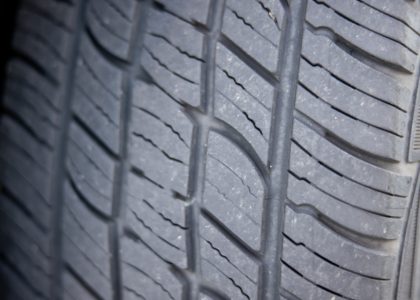
- Run the penny test: place a penny into a tread groove with Lincoln’s head down. If you can see all of his head, the tread is worn out. A quarter works the same way with Washington’s head.
- Make sure every valve stem has a cap with a rubber gasket to keep out dirt and moisture.
If one tire is consistently low at every check, that is a slow leak rather than a coincidence, and it needs a shop before a long haul.
Road-tested tip
Do the pressure check the morning of departure, before the car has been driven and while the tires are still cold. A cold reading is the only one that matches the placard.
Tire pressure is one item on a short list of checks that decide whether a road trip starts smoothly. Our pre-road-trip car checkup covers the rest in about 20 minutes, and if cold weather is part of your route, our guide to winter mountain driving explains how snow, chain laws and freezing temperatures change the tire picture.
Questions from the road
Q: How long should my car sit before I check tire pressure?
A: At least three hours, or check before the car has been driven more than a mile. Driving heats the air inside the tire and raises the reading, so a warm measurement will not match the placard.
Q: Is it okay to inflate tires to the maximum number on the sidewall?
A: Not for normal driving. That number is the tire’s maximum, not the carmaker’s recommendation, and overinflating by just 6 psi can increase the risk of a puncture.
Q: What pressure should I use when the car is fully loaded for a road trip?
A: With a heavy load, tire experts suggest moving toward the maximum cold pressure listed on the door placard, adjusting upward in steps of about 2 psi and staying within that placard maximum.
Q: Do I really need to check the spare tire?
A: Yes. Spares lose air through permeation just like road tires, which is why the Rubber Manufacturers Association includes the spare in its five-minute monthly checkup. Check it with the same gauge before a long trip.
Road rules, fees, closures and border requirements change. Check with the state transportation department, park, rental company or border agency before you travel. This guide is general information.