Renting an RV works best when you work backward from a calendar. Here is a timeline that starts six months out and ends with camp set up on your first night.
Road notes
- Most federal campsites open for reservations six months before your arrival date, and popular campgrounds can sell out in minutes.
- National Park Service reservation windows vary by park, from three to nine months for individual sites and up to twelve months for group sites.
- Private RV parks often accept bookings a year or more in advance, so reserve your can’t-miss stops first.
- Book three to six months ahead for peak season and holiday weekends, where a six-month lead time is a sensible rule of thumb.
- Schedule a pickup-day walkthrough and a short practice drive before you head to your first campground.
Renting an RV for a road trip is two trips in one: the drive and the campgrounds. Each has its own calendar, and they do not always line up. Work backward from your travel dates with a timeline, and the reservation scramble, the rental paperwork and the first-night setup all get a lot calmer. Here is how we would spread the work out, starting six months before you pick up the keys.
Six Months Out: Pick the Route and Count Campground Nights
Start by drawing the route and deciding where you actually need to sleep. An RV trip is anchored by its overnight stops, so count your campground nights before anything else. A loop with five easy overnight stops between home and the destination is far more flexible than a route that depends on one popular campground on a Saturday in July.
This is also the window when the best sites start coming into reach. On Recreation.gov, the reservation system used by 14 federal agencies covering more than 3,600 facilities and 103,000 individual sites, most campsites open for booking six months before your arrival date, and the busiest campgrounds can sell out within minutes of going on sale. The National Park Service sets its own windows by park: individual sites are commonly available six months out, group sites up to twelve months out, but some parks open bookings three months ahead and others nine months ahead. Private RV parks are a different animal entirely, and many accept reservations a year or more in advance.
If your dates fall in peak summer, which typically runs from Memorial Day to Labor Day, a holiday weekend or a stay next to a major attraction, treat six months as your minimum lead time. Waterfront sites, mountain destinations and campgrounds near big events also fill early. If one campground is essential to the whole trip, plan around it first and let the rest of the route follow.
Three Months Out: Reserve Campgrounds and Compare RV Rentals
By three months out, the anchor reservations should be made or in progress. Match the booking effort to the demand:
- High-demand federal campgrounds: know the on-sale date and be ready when sites release.
- Holiday weekends at popular parks: six months or more of lead time is worth it.
- Ordinary weekday stops and shoulder season dates: mid-spring and mid-fall usually leave room to book later without much risk.
One trick that opens up options: shift your dates to avoid Friday and Saturday nights. A Sunday through Thursday stay at a busy campground is much easier to land than a weekend slot for the same week.
| Campground type | Typical booking window |
|---|---|
| Private RV parks | Often a year or more in advance |
| National Park Service individual sites | Commonly six months, varies by park |
| National Park Service group sites | Up to twelve months |
| General rule for peak season and holidays | At least six months |
While you are booking campsites, line up the RV itself. Compare rental companies on total cost, mileage allowances, insurance options and pickup locations, and confirm what license and age requirements apply. Our guide to renting an RV for a first road trip walks through the rental process and the questions to ask before you commit. If the campground you want is full, do not give up; cancellations happen, and some services will monitor a reservation system and alert you when a site opens.
Road-tested tip
Before a campground goes on sale on Recreation.gov, create an account, save a payment method and check the Seasons and Fees tab for the exact on-sale date and time. Most sales start at 7am Pacific, 8am Mountain or 10am Eastern, but not always.
One Month Out: Insurance, Driving Practice and Packing Lists
A month before pickup, close the gaps that are easy to forget. Confirm your insurance situation with the rental company and your own auto insurer, because coverage for a rented RV works differently than coverage for a rented car and arrangements vary by company and policy. Ask the rental company exactly what is included and what you need to add. If any part of the route crosses into Canada or Mexico, check the rules well ahead, since our article on driving into Canada or Mexico covers the documents, insurance questions and rental restrictions that apply.
Then get ready to actually drive the thing. If you have never driven an RV, plan practice time in the first days of the trip: wide turns, longer braking distances, blind spots and backing up all feel different than a car. If you are traveling with kids, brush up on how car seat laws change when you cross state lines, because the rules along your route may not match the ones at home.
Finally, build your packing lists. An RV kitchen, bedding, camp gear and clothes add up fast, and storage space is limited. A phased approach works, and our packing timeline for a long drive explains how to stage things in the week before departure.
One Week Out: Confirm Reservations and Plan Grocery Stops
The week before pickup is for confirmation, not planning. Recheck every campground reservation and the rental booking itself. Confirm pickup time, location and what identification and payment the rental company needs. Review the cancellation policies on your campsites so you know what is refundable if weather or a breakdown forces a change.
Plan your groceries and fuel with the RV in mind. A large rig burns noticeably more fuel than a car, so build that into the budget using the math in our road trip fuel budget guide. Big-box runs are harder in an RV than a sedan, so identify grocery stores with generous parking near your route, and plan to shop every few days rather than hauling a week of food from home. Note dump stations and fuel stations that fit a tall vehicle, since not every gas station canopy clears an RV roof.
Also check conditions along the route. If any leg involves mountain driving, look up elevation, current weather and any restrictions. Mather Campground at the Grand Canyon’s South Rim sits at roughly 7,000 feet, where fall and spring can bring occasional snow, and that is a normal situation for popular western campgrounds. Confirm the forecast and road status before you drive, not after.
Pickup Day: The Walkthrough and Practice Drive
Plan for pickup to take a couple of hours, not fifteen minutes. Before you leave the lot:
- Do the walkthrough with a camera running. Record the agent explaining the water fill, gray and black tanks, propane, generator, breakers and slide-outs. You will want that video on night one.
- Check the basics yourself. Tire condition, lights, turn signals, brake lights, mirrors and the hitch or tow setup if you are pulling anything.
- Ask how everything measures. Overall height and length, fresh water capacity, holding tank sizes and whether the rig has a generator or runs on batteries and propane.
- Get the emergency numbers. Who do you call for a breakdown, and does the rental include roadside assistance?
Then take a practice drive before heading to camp. Find a wide, empty parking lot and practice turning, braking and backing up. Drive at least a few miles on real roads to feel the wind push, the slower acceleration and the extra following distance you need. If the day is getting long, remember that fatigue is a real risk on long driving days, so keep the first day’s miles short.
First Night: Setting Up at a Full-Hookup Site
Book your first night at a full-hookup campground: water, electric and sewer at the site. Everything is easier with power and water on tap, and mistakes cost nothing.
Arrive well before dark. Check in as soon as you get there, and follow the campground’s procedure; some campgrounds have specific rules, like Mather Campground’s instruction that all visitors check in at the kiosk on arrival, with after-hours arrivals directed to volunteer hosts or posted instructions, and anyone arriving after 8:30pm asked to check in the next morning. Many sites are one-way loops with marked parking spots, and campgrounds expect you to verify your vehicle fits the site you reserved and to park on the pavement facing the correct direction.
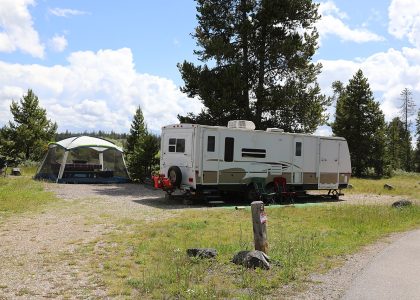
Setup order that works: level the rig, chock the wheels, connect power, then water, then sewer, then extend slides and awnings. Run your fresh water system and test the toilet before anyone needs it. Keep the walkthrough video handy, and expect the first setup to take an hour or more. By the second night you will cut that in half, and by the end of the trip it will be routine.
If you are still weighing the whole idea, start with our guide to renting an RV for a first road trip. And once the trip is booked and the route includes park roads, our article on driving in national parks for beginners covers what to expect on the roads most RV trips end up using.
Questions from the road
Q: How far in advance should I reserve an RV campsite?
A: For peak season trips, holiday weekends and campgrounds near major attractions, plan on three to six months ahead, with six months as a sensible rule of thumb. Ordinary weekdays and shoulder season trips often leave room to book much later.
Q: When do federal campground reservations open?
A: On Recreation.gov, most campsites can be booked six months before your arrival date, and some locations use shorter windows. Check the Seasons and Fees tab on the campground’s page for the exact booking window and on-sale time.
Q: What happens if the campground I want is already full?
A: Cancellations happen, and some services monitor reservation systems and send alerts when a site opens up. It can also pay to call a campground directly, because a quick call sometimes turns up an opening that is not showing online.
Q: Should I book the RV or the campgrounds first?
A: Nail down your route and count your campground nights first, because site availability should shape your dates. Then reserve the hardest-to-get campsites and the RV itself before filling in the easy stops.
Road rules, fees, closures and border requirements change. Check with the state transportation department, park, rental company or border agency before you travel. This guide is general information.