Camping without hookups can save money and get you away from crowds, but it only works if your RV and your plan are ready. Here is what boondocking is, where it is legal and how to try it safely.
Road notes
- Boondocking is RV camping with no hookups, usually free and outside a campground; dry camping is the broader term and can include paid sites.
- Most BLM land allows dispersed camping for about 14 days in a 28-day period, and Forest Service rules vary by forest, so always check locally.
- Your RV must be fully self-contained: fresh water, charged batteries and propane, and holding tanks you can empty at a dump station later.
- Public land rules often require camping at least 100 to 200 feet from water and moving at least 25 miles after a stay limit.
- Some areas, like Alabama Hills in California, now require a free permit, and California requires a campfire permit on BLM land.
Boondocking means parking your RV somewhere with no water, no electric and no sewer hookup, and living off what the rig carries. Done right, it costs little or nothing and puts you in quiet spots campgrounds can’t match. Here are the terms, the rules and what to check before your first night off-grid.
The Words: Boondocking, Dry Camping and Dispersed Camping
These terms overlap, but they describe slightly different things.
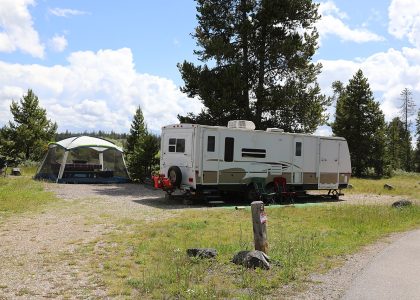
- Boondocking is RV camping, typically free, outside an established campground, with no hookups or other amenities. A tent does not count, and neither does a paid site.
- Dry camping is any RV camping without hookups, whether you paid for the site or not.
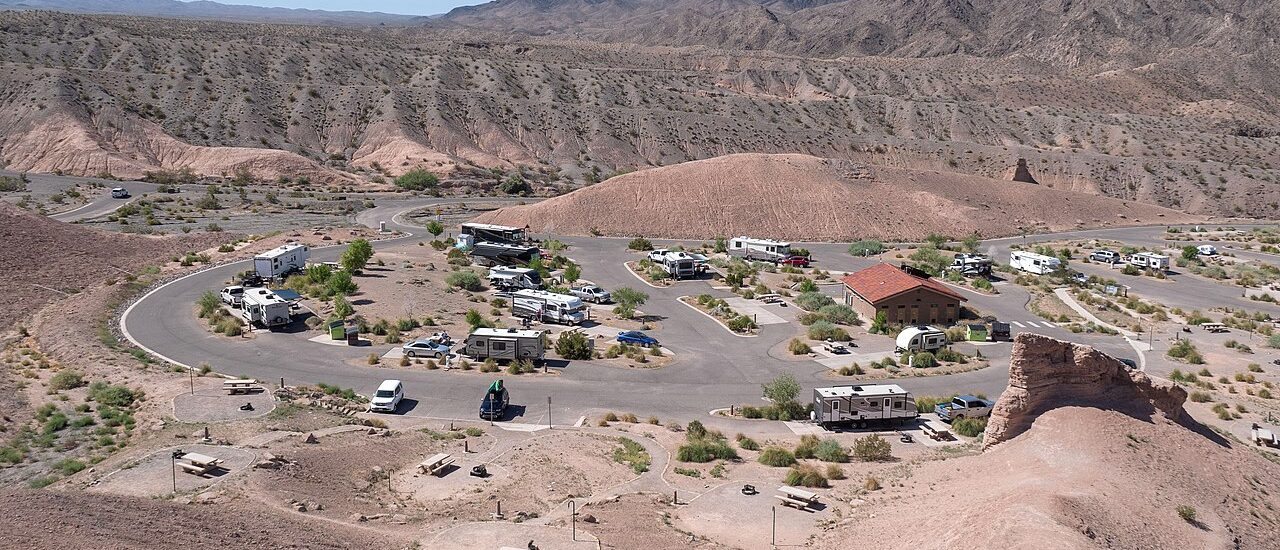
- Dispersed camping is the public land version: camping outside a designated campground, on land managed for that purpose, without toilets, water or trash service. It works with an RV, a tent or no shelter.
One wrinkle: some popular areas now require designated dispersed sites. Hurricane Cliffs in Utah, for example, limits camping to 56 numbered sites with metal fire rings, first come, first served, and not every site fits RVs or trailers.
Where You Can Legally Camp Without Hookups
The Bureau of Land Management allows dispersed camping on most of the land it manages unless an area is posted closed to camping. The usual limit is 14 days within any 28-day period, and after that you must move, often at least 25 to 30 miles away. Some BLM campgrounds charge fees and some accept reservations, but sites are typically first come, first served.
National Forest rules vary more than people expect, which is why the local office matters:
- Black Hills National Forest allows 14 days in any 60-day period and bans open campfires in its South Dakota portions.
- Hoosier National Forest limits stays to 14 days in a 28-day period and 28 days total per calendar year.
- Caribou-Targhee National Forest requires campers to relocate at least 5 road miles after 14 days, and some districts have a 5-day limit.
Winter visitors have another option in the BLM’s Long-Term Visitor Areas in California and Arizona, where a permit allows camping up to seven consecutive months. Watch for permits even at free spots: Alabama Hills, California, requires a free camping permit, and California requires a free campfire permit on BLM land.
Road-tested tip
Before you go, call or email the local BLM field office or Forest Service ranger district. They can confirm stay limits, fire restrictions, road conditions and whether your route can handle your rig.
Water, Power and Waste: How an RV Lives Off-Grid
An RV without hookups runs on three systems. The fresh water tank supplies the sink, shower and toilet through a water pump. House batteries, often assisted by propane, power lights, the furnace fan and the refrigerator. The gray and black holding tanks collect drain water and toilet waste until you can empty them at a dump station. Agencies expect RVs in dispersed areas to be self-contained, since there are no dump stations or spigots on site.
The practical routine: arrive with a full fresh tank, charged batteries and empty holding tanks, then conserve. Shorter showers, careful toilet use and LED lights stretch everything. BLM guidance says to use a portable toilet or pack out waste where possible, or bury it 6 to 8 inches deep and at least 200 feet from water and trails. New Mexico adds its own rule: no camping within 900 feet of developed water sources like troughs, so wildlife and livestock can still reach them.
There is a real budget payoff. A night at a standard RV campground typically runs $25 to $80. As an illustration: a week of dry camping instead saves roughly $175 to $560, minus fuel to reach remote spots and a dump fee at the end.
How Long Your Tanks and Batteries Last
There is no universal number, because tank sizes, group size and habits vary between rigs. Know your capacities before you leave the driveway: fresh water tank, gray and black tanks, and whether you run on batteries alone or have solar or a generator. Renting? Ask the owner how long the tanks and battery typically last under normal use. Shopping? Our guide to buying a used travel trailer covers what to inspect, and tank condition belongs on that list too.
Safety and Knowing When to Move On
Research the exact spot and the roads leading to it, because a site your RV cannot reach is not a site. Contact the local ranger district or field office for road conditions, fire restrictions and area-specific rules, and confirm operating dates because some areas close seasonally. Cell coverage in remote areas is unpredictable, so download offline maps and tell someone your plan.
Stay limits exist to prevent damage from continual use, so track your nights and move on when your limit approaches. Do not leave personal property unattended for more than 10 days on BLM land; some states set different limits.
A First Night Checklist for New Boondockers
- Fresh water tank full, holding tanks empty, gray valve closed.
- Batteries charged and propane topped off.
- Water and food for the whole stay, plus a margin.
- Current fire restrictions checked, with a shovel and water on hand.
- Offline maps downloaded and the field office number saved.
- A dump station located on your exit route.
- Camp set up at least 200 feet from any lake, river or stream.
If you are still deciding whether an RV trip is right for you, start with our guide to renting an RV for a first road trip. And once you are rolling, our article on driving in national parks for beginners covers the park roads many boondockers pass through on the way.
Questions from the road
Q: Do you have to pay to boondock?
A: Dispersed camping on BLM and Forest Service land is generally free, though some areas require a permit or charge fees at developed campgrounds. Some designated dispersed areas, like Alabama Hills, issue free permits that you must carry.
Q: Can any RV boondock?
A: Any RV can dry camp for a night or two, but it must be self-contained, meaning it carries its own water and holding tanks. Agencies such as the Forest Service note that RVs in dispersed areas need to be self-contained since there are no dump stations on site.
Q: How long can you stay in one spot?
A: It depends on the land manager. Many BLM areas limit stays to 14 days within a 28-day period, while some national forests count days differently or add yearly limits, so confirm the rule for your specific area.
Q: Is boondocking the same as sleeping in a parking lot?
A: Parking lot overnighting is sometimes called dry camping, but it is not dispersed camping. Dry camping in any location is legal only with permission from whoever owns or manages the land, so always ask or check posted rules first.
Road rules, fees, closures and border requirements change. Check with the state transportation department, park, rental company or border agency before you travel. This guide is general information.