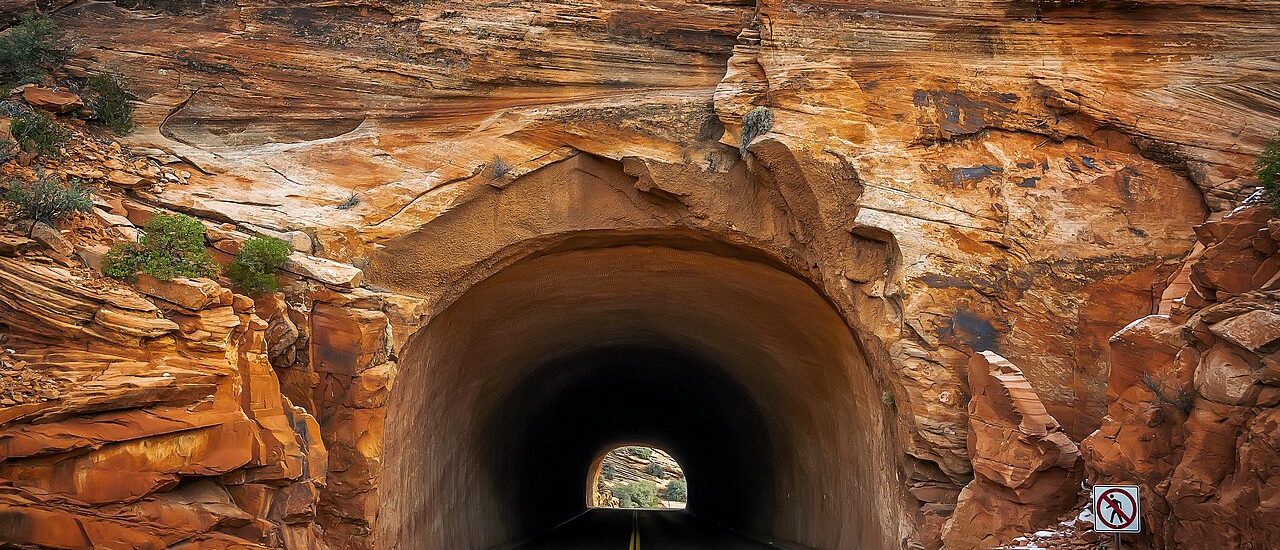
The old oversize permit and ranger escort are gone. Here is how to measure your vehicle, check it against Zion’s limits, and drive the tunnel or detour to Bryce Canyon without surprises.
Road notes
- Vehicles over 35 feet 9 inches long, 7 feet 10 inches wide, 11 feet 4 inches tall or 50,000 pounds cannot drive the Zion-Mount Carmel Highway.
- The oversize tunnel permit and ranger escort ended on June 7, 2026; vehicles within the limits now drive through with no permit and no extra fee.
- Measurements include mirrors, tires, rooftop AC units, bike racks and other attachments, so measure the real vehicle and get rental heights in writing.
- Oversize rigs can still enter through the South Entrance, and Highway 20 via Cedar City adds only about 42 minutes on the drive toward Bryce Canyon.
The Zion-Mount Carmel Tunnel sits on the only paved road connecting Zion Canyon to the park’s east side, which puts it in the path of almost everyone driving on toward Bryce Canyon. For decades, drivers of tall RVs and trucks could buy an oversize permit and pass through with a ranger escort holding oncoming traffic. That option ended on June 7, 2026, when Zion began enforcing hard size and weight limits along the entire highway. The job now looks different: measure your vehicle the way the park does, compare it to the limits, and either drive through as regular traffic or plan a detour before you reach the gate.
Why the Tunnel Turns Away Tall Vehicles
The tunnel was dug in the late 1920s, and the highway it sits on opened in 1930, built for much smaller and lighter traffic. The road runs 10.7 miles from Canyon Junction to the East Entrance and stacks up more than a dozen hairpin curves, narrow stretches and steep descents. It holds a place on the National Register of Historic Places and carries the distinction of a Historic Civil Engineering Landmark, so protecting the bridges and the tunnel itself matters as much as keeping cars moving.
The engineering problem is simple. Anything taller than 11 feet, 4 inches or wider than 7 feet, 10 inches cannot make it through the 1.1-mile tunnel while staying inside one lane. Overlength vehicles struggle to hold their line through the tight curves and switchbacks. Four bridges along the route are not rated to carry more than 50,000 pounds. One-way traffic through the tunnel has been the norm since 1989, and the current limits rest on safety studies from 1989 and 2019 that federal transportation engineers reviewed. Delays played a role too: a 2016 study found that under the old escort system, traffic moved freely an average of 19 minutes per hour, and just 8 minutes on the heaviest day.
Step 1: Measure Your Vehicle the Way the Park Does
The park counts mirrors, tires and anything bolted on: rooftop air conditioners, bike racks, satellite dishes and other add-ons. That detail is where most trips go wrong. A typical Class C motorhome stands 11 feet to 11 feet, 6 inches before anyone counts the rooftop AC, which leaves a big chunk of the rental market within a few inches of the 11 foot, 4 inch cutoff, on one side or the other.
Measure the actual vehicle, top to bottom and side to side, with everything mounted. If you are towing, measure the whole combination. Renters should ask the rental company for the measured height with the air conditioner included, in writing, before reserving. A listing that rounds 11 feet, 5 inches down to “11 feet” quietly removes the east side of the park from your trip, and you learn that at the gate with a campsite already paid for on the far side. Our guide to how to rent an RV for a first road trip covers the questions worth asking before you sign.
Step 2: Check Your Numbers Against the Limits
The restrictions cover the whole road from Canyon Junction out to the East Entrance, tunnel included. Your vehicle counts as a large vehicle if it exceeds any single one of these numbers:
| Measurement | Single vehicle | Combined vehicle |
|---|---|---|
| Height | 11 feet, 4 inches or less | 11 feet, 4 inches or less |
| Width, including mirrors | 7 feet, 10 inches or less | 7 feet, 10 inches or less |
| Length | 35 feet, 9 inches or less | 50 feet or less overall |
| Trailer length | Not applicable | 26 feet or less from hitch to rear axle |
| Weight | 50,000 pounds or less | 50,000 pounds or less |
A combined vehicle means any setup joining two or more units at a pivot point, such as a truck pulling a trailer or a motorhome towing a car. Exceed one limit and you fail. Exceed none and you can drive the highway and the tunnel like any other vehicle, with no permit and no fee beyond the regular park entrance pass.
Step 3: Know What Happens at the Entrance Station
There is no permit to buy and no escort to book anymore. The old permit ran $15 and covered two escorted runs through the tunnel within seven days; it was eliminated when the hard limits took effect. Vehicles within the limits simply drive through, usually under 30 mph given the road’s curves.
If you arrive at the South or East Entrance in a rig over the limits, staff will direct you through a safe turnaround. That is not a small maneuver here. Park staff have described semis that reached the tunnel, discovered they could go no farther, and then had to reverse down the whole series of switchbacks. At the East Entrance, that turnaround ends any trip into the park.
Oversize vehicles entering through the South Entrance still have options, with conditions:
- Park in the visitor center’s large vehicle lot, space permitting.
- Drive up to Zion Lodge if you hold a confirmed reservation there.
- Take your own vehicle through Zion Canyon Scenic Drive in the months when shuttles are not running.
The canyon road closes to private vehicles during the main shuttle season anyway, roughly April through October, so an oversize rig parked at the visitor center gets the same look at the main canyon as anyone else riding the shuttle in. The one thing it cannot do is keep driving east on that highway toward Bryce Canyon.
Careful
Do not drive to the East Entrance hoping for an exception. Staff will turn oversize vehicles around, and neither permits nor escorts exist for RVs or trailers past the posted dimensions.
Step 4: Plan the Detour If You Are Over the Limits
Going oversize does not mean skipping Zion entirely; it means skipping the east side. For drivers headed to Bryce Canyon, the park’s suggested alternate is Highway 20 north of Cedar City, roughly 150 miles and about 2.5 hours. That runs 63 miles beyond the Zion-Mount Carmel Highway route yet adds only about 42 minutes, because state highways move far faster than a park road that usually flows under 30 mph. Drivers linking Zion and Bryce can also use SR-14 or UT-59 and Highway 389 through Cedar City or Fredonia; those detours add roughly 1.5 to 2 hours of travel time.
If your trip continues toward the Grand Canyon’s North Rim, take Highway 59 southeast toward Jacob Lake instead, about 128 miles and just over 3 hours.
Oversize travelers who want to see Zion Canyon itself can leave the rig outside the park. A park-and-ride operates from Zion White Bison Resort in Virgin, Utah, with $5 one-way fares and rides of about 20 minutes into Springdale and on toward the park. Those detours cross remote stretches of southern Utah, so it pays to plan gas stops on remote highway stretches rather than trust the first town you see.
Confirm the Rules Before You Go
Size limits, escort arrangements and shuttle seasons at national parks change, and Zion’s rules took years of study to arrive at. Before you leave, read the park’s large vehicle page and the current conditions page on the National Park Service site for alerts, construction and shuttle schedules. If anything about your rig sits close to a limit, contact the park directly and get the answer in writing. Campground reservations are required inside the park, so confirm where your site sits relative to Canyon Junction before you commit to a route.
Timing Your Drive Around Traffic and Crowds
The gates never close; Zion runs around the clock, every day of the year. Crowds do the work of closures. Between mid-March and late November, campsites inside the park fill nearly every night, and while Watchman Campground stays open all year, South and Lava Point shut down for the winter. Shuttles through Zion Canyon and Springdale run free from early spring into late fall and need no ticket or reservation, so check the schedule before your visit.
If you are driving the east side within the limits, go early. The road is a 10.7-mile run of switchbacks and narrow sections, and the fewer vehicles you meet there, the easier the drive. Oversize drivers should build the detour into the day’s plan from the start, because a 63-mile reroute at the end of a long day is where fatigue creeps in, so give yourself margin.
Mistakes That Get Drivers Turned Around at the Tunnel
- Trusting the listing height instead of the measured height, especially with rooftop AC units.
- Forgetting that width includes mirrors, which is where most RVers get caught.
- Measuring a trailer by its box alone instead of from hitch to rear axle.
- Assuming the restriction covers only the tunnel, when it applies to the whole road from Canyon Junction to the East Entrance.
- Showing up expecting to buy the old tunnel permit, which no longer exists.
- Booking a campsite or lodging on the east side before confirming the rig’s dimensions.
- Ignoring the detour math until the entrance station, when the alternate routes are predictable and easy to plan in advance.
Once the measuring and routing are settled, treat the highway itself with the same respect as any famous park drive. Driving in National Parks for Beginners covers the basics of narrow roads, wildlife and parking, and Before You Drive Going-to-the-Sun Road: What to Check applies the same measure-first habit to another road with hard vehicle limits. Both pair well with this one.
Questions from the road
Q: Do I still need a permit to take my RV through the Zion-Mount Carmel Tunnel?
A: No. The oversize permit and ranger escort system ended on June 7, 2026. Vehicles within the size and weight limits drive through like any other traffic, and vehicles over the limits are turned around.
Q: What height counts as too tall for the tunnel?
A: The limit is 11 feet 4 inches, including mirrors, tires, rooftop AC units and other attachments. Measure the real vehicle, because many Class C motorhomes sit within a few inches of that line.
Q: How do I get to Bryce Canyon if my RV is over the limits?
A: Take Highway 20 north of Cedar City, roughly 150 miles and about 2.5 hours. That is 63 miles longer than the Zion-Mount Carmel Highway route but only about 42 minutes slower.
Q: Can an oversized vehicle still visit Zion at all?
A: Yes, through the South Entrance. You can park in the visitor center’s large vehicle lot when space allows, visit Zion Lodge with a valid reservation, or drive Zion Canyon Scenic Drive when the shuttles are not running.
Road rules, fees, closures and border requirements change. Check with the state transportation department, park, rental company or border agency before you travel. This guide is general information.