The Sun Road is one of the great American drives, but it rewards drivers who check the details first. Work through this list before you leave the hotel.
Road notes
- The alpine section has no fixed opening date and is typically fully open by early July, closing around the third Monday of October.
- Vehicles longer than 21 feet or wider than 8 feet are prohibited between Avalanche Creek and Rising Sun; tall vehicles may hit rock overhangs.
- For 2026, Glacier requires no vehicle reservations, but an entrance pass is still needed and Logan Pass parking is limited to three hours.
- There are no fueling stations inside Glacier, so fill the tank and pack food and water before entering the park.
- The Logan Pass lot usually fills by sunrise, and overnight parking there is not permitted for regular visitors.
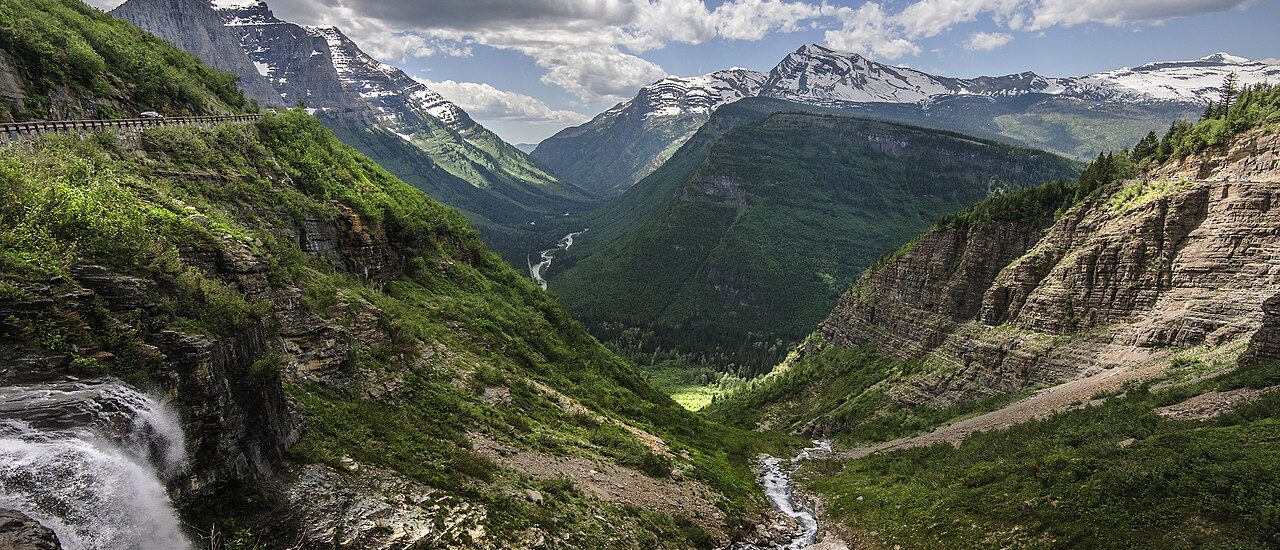
Going-to-the-Sun Road is the drive people plan entire trips around: 50 miles across Glacier National Park, over the Continental Divide at Logan Pass, 6,646 feet above sea level. It is also a road with a short season, strict vehicle size limits, a parking lot that fills before most visitors finish breakfast, and a long stretch with no fuel. Work through this checklist before you point the car at the mountains, because a surprise at 6,000 feet is a bigger problem than one in town.
Check the Opening Date: The Road Is Often Closed Until Late June
The alpine section over Logan Pass does not open on a schedule. Snowfall, avalanches and spring storms decide it, and crews sometimes have to re-plow sections after late storms. Plowing can take up to 10 weeks, and progress is sometimes measured at 500 feet in a day.
- Confirm the alpine section is open. The lower elevation sections stay open all year, but the full road does not usually open until late June at the earliest, and there is no set date.
- Plan around the typical window. The road has typically been fully open by early July and typically stays open until the third Monday of October, though weather can close portions at any time.
- Check the right pages. The National Park Service’s plowing and road status page shows where plows are working. Historical opening and closing dates are posted separately, on other pages of the park’s site, and they are the best tool for picking a realistic travel week.
- Do not book nonrefundable lodging around a guess. Pick dates after the road has historically opened, and keep a backup plan for the rest of the park in case the alpine section opens late.
Measure the Vehicle: Size Limits on the Alpine Section
The stretch between Avalanche Creek and Rising Sun has narrow lanes, tight curves and rock walls. Size limits are enforced there, and they apply to the whole vehicle combination, including a trailer or towed car.
| Restriction | Limit | Where it applies |
|---|---|---|
| Length | 21 feet, including bumpers | Avalanche Creek to Rising Sun |
| Width | 8 feet, including mirrors | Avalanche Creek to Rising Sun |
| Height | Vehicles over 10 feet may have difficulty | Logan Pass west to the Loop |
- Measure your rig at home. Bumpers and mirrors count, so a pickup that seems well under the length limit can cross it once a trailer is hitched.
- Note the height warning. Vehicles taller than 10 feet may struggle with rock overhangs on the westbound descent from Logan Pass toward the Loop.
- Know the workarounds. Stock trucks and trailers can still reach Packers Roost from the west and Siyeh Bend from the east, so a rig too big for the full road is not shut out entirely. If you are over the limits, you can drive the allowed sections, rent a smaller car for the day, or use the park shuttle.
Reservations and Passes: What the Gate Actually Requires
Entry rules at Glacier have changed several times, so check the current year’s rules rather than relying on advice from a previous trip.
- Check whether vehicle reservations are required. The park piloted vehicle reservation systems from 2021 through 2025. For 2026, no vehicle reservations are required, and drivers can enter at any time of day.
- Buy an entrance pass. Even without a reservation, an entrance pass such as a standard, annual or America the Beautiful pass is required. The park also honors a list of annual and lifetime interagency passes at the entrance station.
- Verify rules on official sources. Confirm the current year’s requirements on the National Park Service site and on Recreation.gov, because the system has shifted repeatedly.
Road-tested tip
Cell service is unreliable throughout the park. Print or download your pass, shuttle tickets and maps before you arrive, and keep a photo ID handy at boarding.
Fuel, Food and the Long Stretch With No Services
This one catches people every summer.
- Fill the gas tank before you enter. There are no fueling stations within Glacier’s boundaries, and the gateway towns sit well outside the drive itself.
- Do the fuel math for the whole trip. Our guide to road trip fuel budgeting helps you price out gas for the approach drive, not just the 50 miles inside the park.
- Pack food and water. The Logan Pass Visitor Center has public restrooms and drinking water, but plan on carrying your own snacks and meals for the alpine section.
- Charge phones and cameras. The park itself reminds visitors to arrive with full batteries and a full tank, since services along the road are minimal.
Parking at Logan Pass: Sunrise or the Shuttle
Logan Pass is the trailhead for some of the park’s most popular hikes, and demand far exceeds the lot.
- Arrive extremely early or accept a wait. The Logan Pass parking lot usually fills before dawn and stays busy all day, leaving few chances to park later.
- Respect the three-hour limit. Beginning July 1, parking at Logan Pass is limited to a maximum of three hours, enough time for the visitor center, a ranger program or a shorter hike.
- Skip overnight parking. Overnight parking is not permitted, apart from a small number of exceptions such as backcountry permit holders, so the lot is not a place to sleep.
- Book a shuttle ticket for longer hikes. For 2026, the ticketed Logan Pass Shuttle runs July 1 through September 7, with tickets sold in advance through Recreation.gov for a $1 fee per ticket. Every passenger age 2 and older needs one, up to 10 tickets per day, and tickets are nontransferable with photo ID possibly requested.
Weather, Rockfalls and the Daily Closure Check
Even in July and August, the road can close without much warning.
- Check road status every morning. Weather can shut down sections of the road at any point in the season, and the park posts live updates.
- Sign up for alerts. Glacier offers text updates for road openings and closures; the park lists the current number on its road status page.
- Check routes outside the park too. Some roads beyond the boundary are seasonal as well, so review the Montana Department of Transportation map before the approach drive.
- Prepare for mountain conditions. Cold air, fog and storms can arrive fast at the pass. Our guide to winter mountain driving covers chain laws, tire rules and closures that apply on high passes.
Pullouts, Speed and the Narrow Cliffside Lanes
The driving itself rewards patience.
- Follow the posted limits. Posted speeds run 40 mph on the lower stretches of the road and drop to 25 mph on the alpine section.
- Budget real time. The full 50 miles takes about two hours without stopping. With pullouts, traffic and photo stops, plan for most of a day.
- Watch for blind curves. Animals and pedestrians cross the road unexpectedly, especially near trailheads and overlooks.
- Use pullouts to let traffic pass. If a line builds behind you, find a designated pullout rather than stopping in the lane.
A checklist like this one works on any marquee drive, and the habits transfer. If this is your first park road, our guide to driving in national parks for beginners covers the broader patterns, and our scenic byway planning guide helps you string mountain passes like this one into a longer route.
Questions from the road
Q: How long does it take to drive Going-to-the-Sun Road?
A: Without stopping, the full 50 miles takes about two hours. With pullouts, traffic and parking stops, plan for most of a day.
Q: Can I drive my RV over Logan Pass?
A: Only if the whole rig, including bumpers and mirrors, stays under 21 feet long and 8 feet wide between Avalanche Creek and Rising Sun. Anything over 10 feet tall may also have trouble with rock overhangs on the west side of the pass.
Q: Do I need a reservation to drive Going-to-the-Sun Road in 2026?
A: Glacier is not requiring vehicle reservations in 2026, though these rules have changed from year to year. An entrance pass is still required, so confirm current rules on the National Park Service site before you go.
Q: Where can I get gas near Going-to-the-Sun Road?
A: There are no fueling stations inside Glacier’s boundaries. Fill up in a gateway town such as West Glacier before you enter the park.
Road rules, fees, closures and border requirements change. Check with the state transportation department, park, rental company or border agency before you travel. This guide is general information.