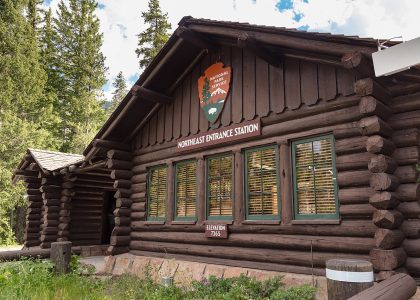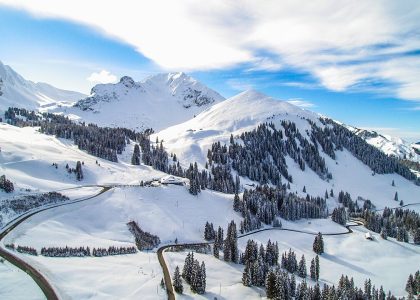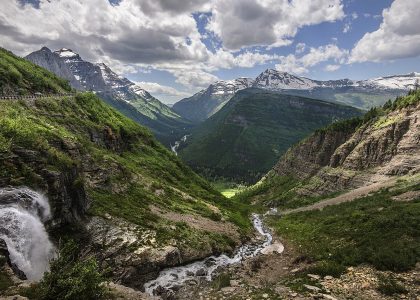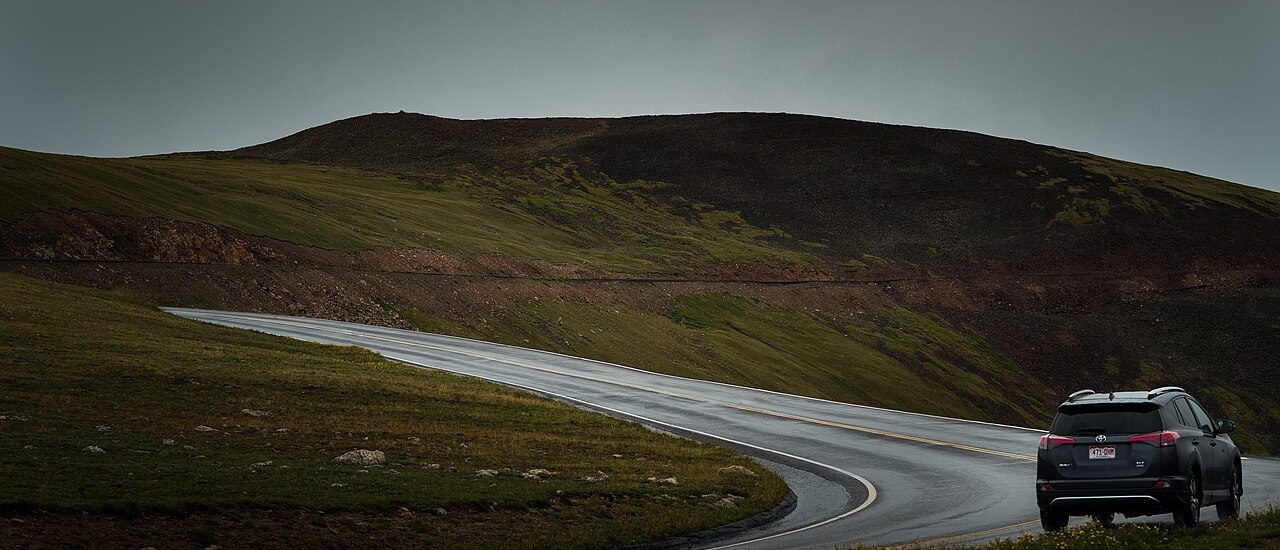
Park roads run on their own rules. Here is what to know before your first drive through an entrance station, from timed entry and vehicle limits to fuel, cell service and parking.
Road notes
- Timed entry rules vary by park and change by season; Rocky Mountain required timed entry from late May through mid-October in 2026, while Arches, Glacier and Yosemite had no advance reservation requirement that summer.
- Glacier prohibits rigs longer than 21 feet or wider than 8 feet, mirrors included, from driving the Going-to-the-Sun Road section that connects Sun Point with Avalanche Campground.
- Apart from a water station at Logan Pass, the 33 miles of Going-to-the-Sun Road from Lake McDonald to the Rising Sun Motor Inn have no services, so enter with a full tank plus water and snacks.
- Expect the Logan Pass parking lot to sit full from roughly 9:30 a.m. to 4 p.m., and parks may divert traffic when parking areas reach capacity.
- Cell service is unreliable in many parks, so download offline maps and print or save reservations and tickets before you arrive.
Your first drive inside a national park usually starts with a surprise: the road is narrower, slower and busier than the highway that got you there. Park roads were built for scenery and low speeds, and many of them run through mountains where weather, parking and even your vehicle’s length can shape the day. This guide walks through what a first-timer needs to know before rolling up to an entrance station, from reservation systems and vehicle limits to wildlife, fuel and parking.
Park Roads Are Not Regular Roads
Park roads exist to move visitors slowly through scenery, not to move traffic quickly between two points. That changes the design. Lanes are narrow, curves are tight, shoulders are often missing, and pullouts replace the emergency lanes you are used to. The Going-to-the-Sun Road in Glacier National Park shows the pattern: a 50-mile road that climbs across mountain passes, rides the spine of the Continental Divide and passes glacial lakes and sheer cliff faces.
Elevation adds its own rules. At Logan Pass, the high point on that road, temperatures typically run at least ten degrees Fahrenheit colder than what you feel at lower elevations, so a warm morning at the gate can turn cold at the top. Mountain weather also changes fast, and fog, rain or an afternoon storm can cut visibility within minutes.
Drive these roads as if the road itself is the destination. Expect to average well below the posted limit, expect to stop often at viewpoints, and expect oncoming traffic that includes rented RVs driven by people seeing the road for the first time. The car works harder on grades like these, too, so run through our pre-road-trip car checkup before you leave town.
Timed Entry and Reservations: What to Check Before You Go
Timed entry is a reservation system that spreads drivers across the day. You book an arrival window, enter during that window, and can then stay in the park as long as you like. Rocky Mountain National Park runs the clearest example. For the season beginning May 22, 2026 and running through mid-October, the park requires a timed entry reservation to enter any area, including outlying spots such as Lily Lake and Longs Peak, during set hours. The basic Timed Entry reservation covers entry between 9 a.m. and 2 p.m. daily. A second option, Timed Entry + Bear Lake Road, is needed between 5 a.m. and 6 p.m. for the Bear Lake Road Corridor on the park’s east side, and it also covers every other area of the park. Reservations are made through Recreation.gov and come in two-hour entry windows. With the basic reservation, you can also enter before 9 a.m. or after 2 p.m. without booking anything.
Here is the part that trips up first-timers: these rules differ by park and can change from one season to the next. Check the National Park Service page for each park on your trip, because the answer is different in every place. For 2026, four popular parks announced these approaches:
| Park | Advance entry plans for summer 2026 |
|---|---|
| Rocky Mountain | Timed entry continues from late May through mid-October |
| Arches | No timed entry system; arrive early and stay flexible |
| Glacier | No park-wide vehicle reservation; targeted congestion management on Going-to-the-Sun Road and parking limits at Logan Pass |
| Yosemite | No advance reservations; temporary traffic diversions when parking areas reach capacity |
Reservations are one thing and entrance fees are another, so budget for both. At Glacier, for example, the entrance fee is $35 per vehicle and stays valid for seven days, with the park also honoring interagency annual and lifetime passes.
Road-tested tip
Save every reservation and ticket somewhere that works without cell service, such as a printed copy or a downloaded file. Parks warn that phones cannot be counted on inside the boundaries.
Vehicle Limits on Famous Roads and What to Do If Yours Is Too Long
Some marquee roads have hard size limits. On the Going-to-the-Sun Road, the section from Sun Point to Avalanche Campground bars any vehicle or vehicle combination over 21 feet long or 8 feet wide, mirrors included. The word combination matters: a pickup towing a trailer, or a motorhome with a car behind it, is measured across the whole rig, and a tow vehicle well under 21 feet on its own can cross the line once you hitch something to it.
Campgrounds inside parks carry limits of their own. At Glacier’s Sprague Creek Campground, the maximum for any vehicle or combination is 21 feet long including bumpers and 8 feet wide including mirrors. Nearby Avalanche Campground takes vehicles up to 26 feet, but only 50 of its sites do.
If your vehicle is too big for the road you want, you still have options:
- Drive the allowed sections and skip the restricted stretch.
- Use the park shuttle where one exists. Glacier’s shuttle runs as a reservation-only express service beginning July 1, 2026, with tickets sold through Recreation.gov for a $1 processing fee per ticket, and every passenger age 2 and older needs one.
- Rent a smaller vehicle for park days, or build an RV trip around roads without length limits. Our guide to renting an RV for a first road trip covers how to pick a rig you can actually drive.
Measure your rig at home, mirrors and bumpers included, and confirm limits on the specific road’s page on the park’s website.
Wildlife, Speed Limits and the Pullout Rule
Glacier supports close to 70 species of mammals, among them grizzly bears, gray wolves and wolverines, and parks with famous roads generally have similar company along the shoulder. Wildlife also tends to be livelier in the cooler morning hours, which is one more reason to start at dawn.
Three habits cover most situations. First, slow down below the posted limit anywhere visibility drops or vegetation grows close to the pavement, because animals step out with little warning. Second, never stop in the travel lane for a sighting. If you want to watch, use a pullout, and if a wildlife jam forms, stay in your car, move when the line ahead moves, and give the animals far more space than they appear to need. Third, follow food rules exactly. In bear country such as Glacier’s campgrounds, regulations require all food, drinks, coolers, cooking gear and pet food to go inside a vehicle with closed hard-sided doors or into the bear-proof lockers near the campground restrooms whenever it is not being actively used.
The pullout rule also keeps traffic civil. Park roads often move at the speed of the slowest car, and a line of vehicles stacking up behind you means it is time to let others pass. On narrow roads, a pullout can be the only place two wide vehicles can get by each other at all.
Fuel, Food and the No-Cell-Service Reality
Services thin out fast inside park boundaries. On the Going-to-the-Sun Road, the 33 miles of road from Lake McDonald to the Rising Sun Motor Inn contain no services at all, apart from a water station at Logan Pass. The gateway towns handle the rest: on Glacier’s west side you can fuel up at West Glacier, and on the east side at St. Mary, both before the entrance station.
Treat every park drive as a leg between two certain fuel stops. Enter with a full tank, carry water and snacks for the whole day, and price the miles before you go; our road trip fuel budget guide shows how to work those costs out.
Assume your phone will not help. Cell service is unreliable throughout Glacier, and the pattern repeats across the park system, especially in canyons and at high elevation. Download offline maps, save or print reservations and shuttle tickets before you arrive, and write down the numbers that matter. Rocky Mountain posts a recorded Trail Ridge Road status line at (970) 586-1222 that runs around the clock, and most parks offer a similar line or a daily road status page.
Parking Etiquette and Trailhead Crowds
Parking is the choke point on most famous park roads. At Logan Pass, the lot tends to sit full from around 9:30 in the morning until 4 in the afternoon, and Glacier now requires visitors planning longer hikes from Logan Pass to use the shuttle instead of parking there. Overnight parking at Logan Pass is not permitted, with exceptions for backcountry permit holders and registered Granite Park Chalet guests.
When parking areas or roadways reach capacity, parks may impose short-term traffic management measures. Yosemite plans to use temporary traffic diversions when its lots fill in 2026, which means the road itself can close to incoming cars, not just the lot.
A few habits keep everyone moving:
- Arrive early, ideally before mid-morning, or plan for the late afternoon instead.
- If a lot is full, drive on to the next trailhead rather than circling for a spot.
- Never park on vegetation, on curves, or blocking the roadway, even briefly.
- Pull all the way into spaces so traffic keeps flowing past you.
Your First Park Drive, Step by Step
Pick one park within a few hours of home and drive its shortest scenic road on a weekday, arriving when the gate opens. Before you go, do three things: check the park’s National Park Service page for entry reservation rules and road status for your dates, measure your vehicle including anything you tow, and fill the tank the night before. That single low-stakes run teaches you more about pace, pullouts and parking than any amount of reading, and it sets up longer trips later.
When you are ready to string several slow, scenic roads together, our guide to planning a scenic byway trip explains how parkways, passes and coast roads differ from ordinary highways. And if that first park drive falls in the cold months, read our winter mountain driving guide before committing to any high-elevation road.
Questions from the road
Q: Do I need a reservation to drive into a national park?
A: It depends on the park and the season. Some parks, such as Rocky Mountain National Park, use timed entry reservations during peak months, booked through Recreation.gov, while others rely on traffic management when lots fill. Check the park’s own National Park Service page for your travel dates.
Q: Can I drive an RV on the Going-to-the-Sun Road?
A: Glacier bars any vehicle or combination longer than 21 feet or wider than 8 feet, including mirrors, from the Going-to-the-Sun Road section that connects Sun Point with Avalanche Campground. Measure the whole rig, including any towed car, and plan to drive the allowed sections or use the park shuttle.
Q: What if I show up without a timed entry reservation?
A: At Rocky Mountain, drivers holding the basic Timed Entry reservation can enter before 9 a.m. or after 2 p.m. without booking anything, and other parks may offer similar windows. Parks also turn cars away temporarily when lots fill, so arriving early helps either way.
Q: How early should I start a park drive?
A: As early as you can manage. Wildlife is more active in the morning, the Logan Pass lot usually fills by mid-morning, and a dawn start gives you slack for full lots and temporary traffic diversions later in the day.
Road rules, fees, closures and border requirements change. Check with the state transportation department, park, rental company or border agency before you travel. This guide is general information.