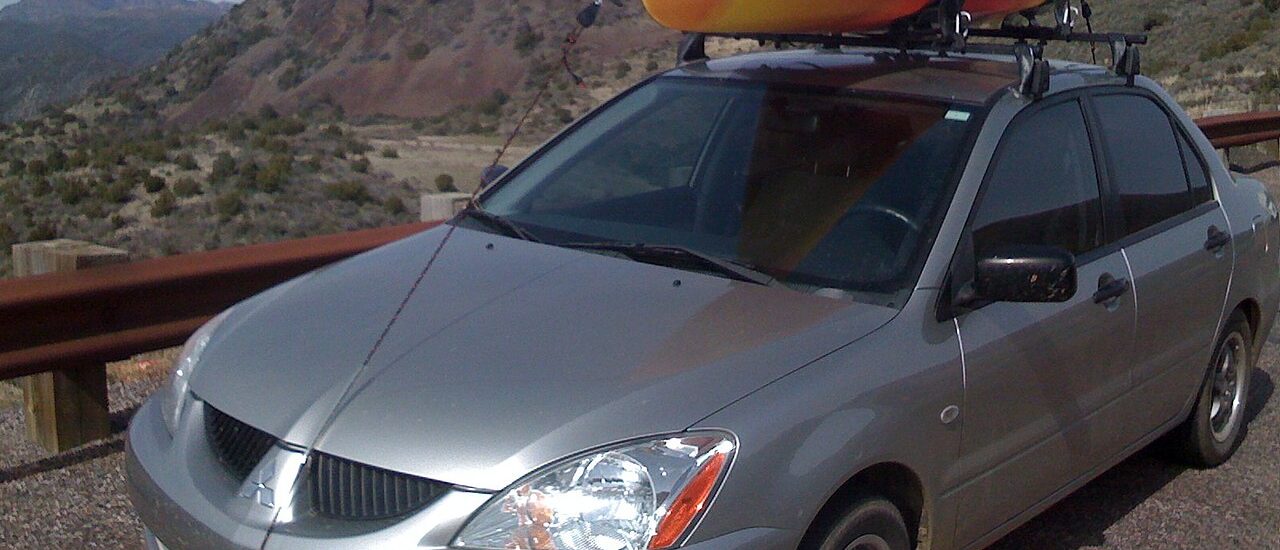
A cargo box always costs some fuel at highway speed, but the size of the hit depends on your car, your speed and how you use it. Here are the real numbers.
Road notes
- Consumer Reports found a sedan lost 19 percent of its fuel economy at 65 mph with a rack and pod, while a small SUV lost 13 percent.
- The fuel penalty grows with speed: one rack maker’s published testing put the impact at 75 mph at roughly double the 55 mph figure.
- Subtract rack and box weight from your vehicle’s roof load limit to get the cargo you can actually carry, which is often far less than the box’s own rating.
- Boxes suit bulky, light items; keep heavy gear in the cabin and balance the load with about half its weight centered between the crossbars.
- Take the rack and box off when you are not using them; driving with empty racks causes most of the national fuel waste from roof cargo.
A roof cargo box looks like the easy fix for a full trunk on a road trip. Anything riding on the roof, though, changes how the car cuts through the air, how it handles, and where it fits. Claims about the fuel economy hit range from barely noticeable to trip-ruining, and the truth sits in between.
Myth: A Cargo Box Always Wrecks Your Fuel Economy
The penalty is real, but it is not a fixed tax on every car. In Consumer Reports testing at a steady 65 mph, a 2019 Nissan Altima sedan got nearly 48 mpg with a bare roof. Adding just the empty rack dropped mileage by almost 11 percent, about 5 mpg. With a cargo pod on top, the total loss reached 19 percent, or 9 mpg. A 2019 Toyota RAV4 fared better: the empty rack cost about 2 percent, and the pod brought the loss to 13 percent.
| Setup at 65 mph | 2019 Nissan Altima sedan | 2019 Toyota RAV4 SUV |
|---|---|---|
| Nothing on the roof | Nearly 48 mpg | 41 mpg |
| Empty roof rack | About 43 mpg, down 11 percent | 40 mpg, down about 2 percent |
| Rack plus cargo pod | About 39 mpg, down 19 percent | 35 mpg, down 13 percent |
Berkeley Lab researchers put a national frame on it: roof racks can cut a vehicle’s efficiency by up to 25 percent, and in 2015 the added fuel burn from racks accounted for 0.8 percent of all national fuel consumption, roughly 100 million gallons of gas.
Fact: The Penalty Depends on Speed, Load and Vehicle
Drag rises with speed, and the penalty grows with it. Published testing from one rack maker put the fuel economy impact at 75 mph at roughly double the 55 mph figure, which is why the numbers above came from steady highway runs. Body style matters too: the sedan lost more than the SUV because its roofline starts out lower and smoother. Design helps as well. An SAE aerodynamics study found a redesigned rack cut drag by about 9 percent versus a benchmarked rack, which improved fuel economy roughly 18 percent over that benchmark. In practical terms, that means a low-profile box, a fairing or wind deflector if the rack offers one, and nothing stacked above the shell.
Myth: The Box Is Free Storage for Anything You Own
A roof box is built for bulky, light cargo: skis, sleeping bags, clothing. It is not free storage for anything you can lift into it. Every model has a load limit stated in its manual, and the limits scale with size. A small 8-cubic-foot box typically carries about 75 pounds, while a 16-cubic-foot box supports around 165 pounds. Exceeding the limit can distort or break the box, overload the rack beneath it, and in a worst case send the box off the roof. Even within the limit, cargo up high raises the center of gravity, and uneven packing can make the car feel unstable in corners and sudden stops.
Fact: Weight Limits and Roof Load Ratings Are Real
Three separate limits apply, and all of them must hold. The vehicle’s roof load limit is in the owner’s manual, and SUVs generally carry more than smaller sedans. The rack has its own maximum weight rating. The box has a cargo limit of its own. The working number comes from subtraction: roof load limit, minus rack weight, minus empty box weight, equals the gear you can actually carry.
Road-tested tip
Run the subtraction before you pack. If the roof’s limit is 165 pounds, the racks weigh 11 pounds and the empty box weighs 44 pounds, you have 110 pounds left for real gear. The dynamic limit, the one for a vehicle in motion, is the number that counts, not the static limit for a parked vehicle.
Dynamic limits sit lower than static ones because the roof absorbs forces from bumps, braking and acceleration while you drive.
Myth: Any Box Bolts Onto Any Roof
Roofs come in several types: bare metal, raised side rails, fixed mounting points and more. A box clamps to crossbars, the crossbars clamp to the roof, and hardware made for one setup often will not fit another. Rack and box makers publish fit guides by vehicle make, model and roof type, so check the guide for your specific car before buying, and confirm the combined setup stays within the ratings above. If the car is a rental, a roof box is usually an add-on rather than standard equipment, so ask before you count on the space.
Fact: Garage Heights, Car Washes and Clearance
The box adds height, and height causes trouble after the purchase. Measure the vehicle’s total height with the box installed and write the number down, because posted clearance bars in parking garages will not negotiate. Most automated car washes will not accept a vehicle with a roof box, so plan on hand washing or removing the box on wash day. Low awnings, drive-through overhangs and older parking structures deserve the same caution.
What the Numbers Mean for Your Next Trip
None of this argues against a box. It argues for packing with intent. Put bulky, light items up top and keep heavy things in the cabin or trunk, where they lower the center of gravity. Box makers suggest a balance near one quarter of the weight forward, one half centered between the crossbars and one quarter to the rear, with everything strapped so it cannot shift. To weigh an item, step on a bathroom scale holding it and subtract your own weight. Stay under the box maker’s recommended top speed, usually 80 mph, and drive a little slower with a heavy load. In winter, clear snow and ice off the box and the rest of the roof: wind tunnel testing found simulated snow 58 millimeters thick on the hood, roof and trunk raised drag by 16 percent, and patchy snow and ice raised it by up to 18 to 20 percent, with some patterns also affecting stability in crosswinds.
Fold the mileage penalty into your gas numbers before you leave with our guide to road trip fuel budgeting, and work through the packing timeline so heavy bags land in the cabin instead of on the roof.
Questions from the road
Q: Can I leave my cargo box on all year?
A: You can, but you pay for it in fuel. Berkeley Lab research found drivers log about eight times more miles with empty racks than loaded ones, and an empty rack alone cut fuel economy nearly 11 percent on one tested sedan.
Q: How much weight fits in a roof cargo box?
A: It depends on the model: small 8-cubic-foot boxes typically carry about 75 pounds and larger 16-cubic-foot boxes about 165 pounds. Your vehicle’s roof load limit and the rack’s rating may set a lower ceiling, so do the subtraction first.
Q: How fast can I drive with a roof box?
A: Box makers generally recommend a maximum speed of about 80 mph, and posted speed limits always apply. Slow down further with a heavy or uneven load, since roof cargo raises the vehicle’s center of gravity.
Q: Will an automated car wash damage my cargo box?
A: Most automated car washes will not accept a vehicle with a roof box at all. Plan to hand wash or remove the box, and check posted clearance heights before entering parking garages.
Road rules, fees, closures and border requirements change. Check with the state transportation department, park, rental company or border agency before you travel. This guide is general information.